Studio · December 8, 2025 · 7 min read · Sartaj Aziz Lone
Custom Software Development in 2027: Web, Mobile and SaaS Products Built Around Real Problems
Learn how custom web, mobile and SaaS development solves real business problems, with examples from Appo Matrix projects and tips for starting your own.
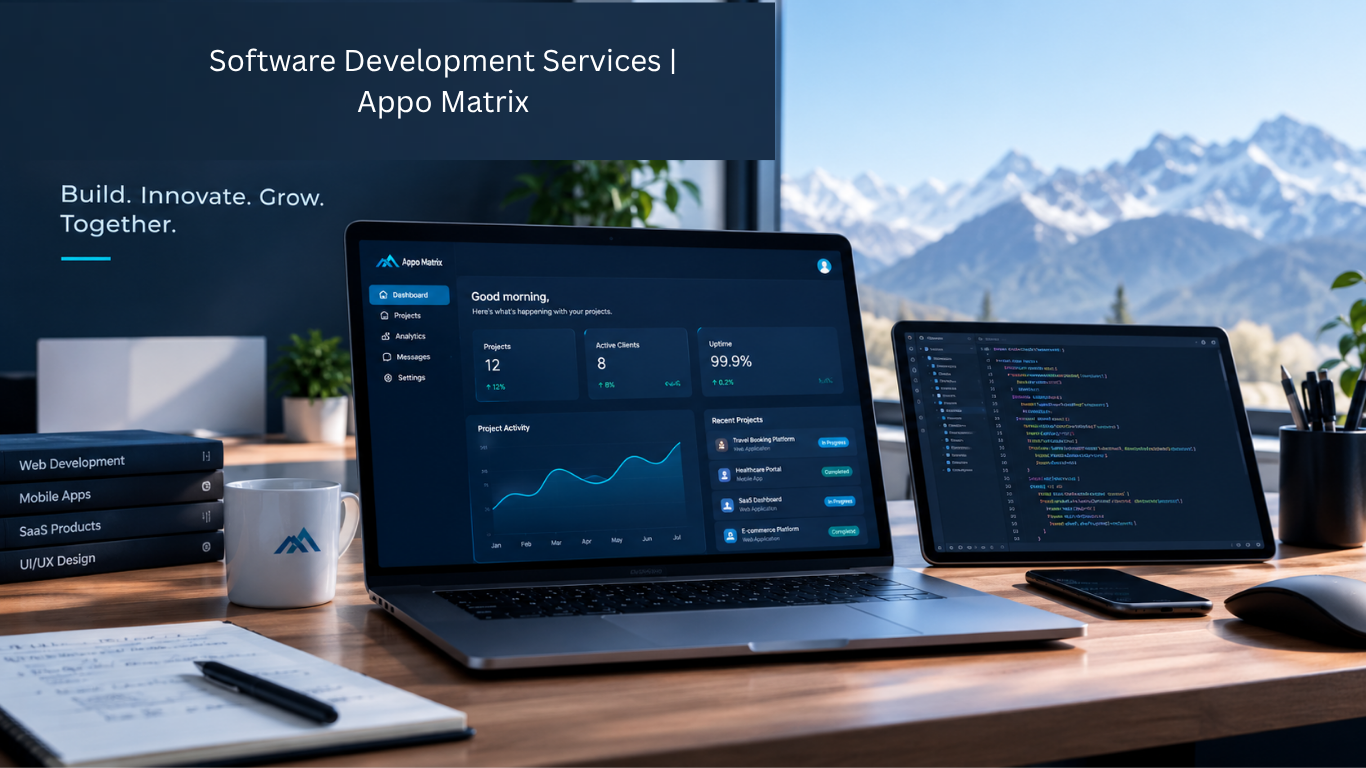
Most great software starts with a small, annoying problem.
A video editor keeps juggling browser tabs. A freelancer spends an evening formatting invoices instead of finding new clients. A dispatcher loses track of a driver somewhere in the mountains. None of these people set out to buy software. They just wanted their work to be easier.
That's the way we think about building digital products at Appo Matrix. We're a software team based in Gilgit-Baltistan, building web platforms, mobile apps and SaaS products for businesses around the world. Whatever the technology, the starting point is always the same: understand the real problem, then build something that solves it properly.
In this guide, we'll share what custom software development looks like in practice, with three real examples from our work, and how to decide whether it's the right move for your business.
What Is Custom Software Development?
Custom software is software designed and built for a specific business, process or audience, rather than for everyone.
Off-the-shelf tools are great when they fit. But they come with trade-offs. You adapt your process to the software, pay for features you never use, and still end up working around the gaps.
Custom development flips that. The software is shaped around how you actually work, how your customers behave and where you want to grow.
It usually falls into three broad areas:
Web development: websites, web apps and browser-based tools.
Mobile app development: apps for phones and tablets.
SaaS development: cloud-based products that people subscribe to and use online.
Let's look at one real example of each.
Web Development: Views Sync
The problem. Creators and editors often need to watch and compare several YouTube videos at once. Doing that across separate browser tabs means constant switching, manual playback adjustments and plenty of lost time.
What we built. Views Sync is a browser-based tool that brings multiple YouTube players into one workspace. Users add video links or IDs, pick a layout, reorder tiles and control playback through a shared master timeline. It even supports multiple instances of the same video with different offsets, so you can compare specific moments side by side.
Why it matters. Because it runs entirely in the browser, there's nothing to install. Lower friction means more people actually use it.
Built with: Next.js, React, JavaScript, PHP, Node.js, MySQL and PostgreSQL.
Mobile Development: Invoice Generator App
The problem. Freelancers and small businesses lose time preparing invoices by hand: formatting documents, retyping details and double-checking totals.
What we built. The Invoice Generator App gives users an accessible interface and a structured billing workflow. They can create professional invoices efficiently and keep their billing information organized in one place.
Why it matters. Invoicing isn't glamorous, but getting paid depends on it. The project reported around 80% less manual invoice work, 60% faster invoice creation and 100% calculation accuracy.
Built with: Flutter and Firebase.
SaaS Development: Freight Dispatch Platform
The problem. Regional freight operators were running dispatch from manual spreadsheets. That caused missed loads and poor visibility, especially for drivers working through remote valleys with patchy mobile coverage.
What we built. A cloud SaaS platform with real-time tracking, automated routing suggestions and an offline-first mobile app for drivers. Dispatchers and leadership share one board.
Why it matters. Within three months of launch, dispatch time dropped 62% and on-time delivery reached 97%.
Built with: Next.js, PostgreSQL, React Native and AWS.
What These Projects Have in Common
The three products serve different people, but they follow the same playbook.
1. They solve one clear problem. None of them tries to do everything. Each is focused on a single, real frustration, which keeps the product simple and useful.
2. They're designed for real conditions. Views Sync works in any browser. The invoice app fits busy people's routines. The dispatch driver app keeps working when the signal drops. Good software fits the environment it's used in.
3. They respect people's time. Fewer tabs, fewer repeated tasks, fewer calls to chase updates. The best products quietly take work off people's plates.
4. They give people one place to work. A shared timeline, one billing hub, one dispatch board. Bringing scattered information together is often where the biggest gains come from.
5. They're built on a foundation that can grow. Choosing the right stack and architecture early makes it easier to add features later.
How to Choose the Right Type of Software
Not sure which route fits your idea? Here's a quick way to think about it.
If you need...
Consider...
A tool people can use instantly, with no install
A web application
Something people use on the go, daily, on their phones
A mobile app
A product you can offer to many customers on a subscription
A SaaS platform
A professional online presence that attracts customers
A business website with strong SEO
Many products combine more than one. The freight platform, for example, pairs a web dashboard with a mobile driver app. A good development partner will help you decide what to build first and what can wait.
Signs You Might Need Custom Software
It may be time to consider a custom solution if:
You're managing an important process with spreadsheets, chat threads and workarounds.
Existing tools force you to change how your business works.
Your team keeps repeating the same manual tasks.
You have a product idea that nothing on the market quite covers.
You want to build something that earns recurring revenue.
You need software that can scale as you grow.
If a few of these sound familiar, it's worth having a conversation.
How We Work
Every project is different, but our approach stays consistent.
Understand first. We start by learning about your business, your users and the problem you want to solve.
Plan the essentials. We agree on what matters most for launch, so you get a focused first version rather than a bloated one.
Design and build. We create clean, usable interfaces and reliable software, using the tools that best fit your needs.
Launch and learn. We help you get live, then use real feedback to guide what comes next.
Keep improving. Good products evolve. We help with updates, performance and new features as your needs change.
Throughout, we aim to keep communication clear and jargon-free. You should always know what's happening and why.
Don't Forget to Be Found
Building a great product is only half the job. People also need to discover it.
That's why we pair development with SEO and performance work. Fast loading, mobile-friendly pages, clear structure and helpful content all make it easier for search engines, and now AI-powered search tools, to understand and recommend your business. A well-built product with a well-optimized website gives you the best chance of reaching the right audience.
Work With Appo Matrix
Appo Matrix builds digital products, web platforms, mobile applications and SaaS solutions from Gilgit-Baltistan for businesses worldwide. Our services include software engineering, product and design, cloud and hosting, e-commerce, data and AI, digital marketing, and SEO and performance.
Whether you're sketching your first idea or trying to fix a process that's outgrown its tools, we'd love to hear about it.
Get in touch with the Appo Matrix team to talk about your project, or see more of our work in the portfolio.
Frequently Asked Questions
What types of software does Appo Matrix build?
We build custom web applications, mobile apps and SaaS platforms, along with the cloud infrastructure, design and marketing support that help them succeed.
Do you work with clients outside Pakistan?
Yes. We're based in Gilgit-Baltistan and work with businesses around the world.
How do I know whether I need a web app, a mobile app or a SaaS platform?
It depends on who will use it, where and how often. If you're unsure, we can help you work through the options and recommend a practical starting point.
What technologies do you use?
We choose tools to fit the project. Recent work has used Next.js, React, React Native, Flutter, Node.js, PHP, Firebase, PostgreSQL, MySQL and AWS.
Can you help me improve an existing product or website?
Yes. We can review what you have, find what's holding it back and suggest practical improvements to performance, usability and visibility.
How do I get started?
Send us a message through our contact page. A short description of your idea or problem is enough to begin the conversation.
Appo Matrix | Software Solutions & Digital Product Development
Building digital products, web platforms, mobile applications and SaaS solutions from Gilgit-Baltistan for businesses worldwide.